


Last updated: November 6, 2026
Reviewed by an HR compliance professional (PHR, SHRM-CP) on November 8, 2026.
California lunch break law, called the meal period rule in the Labor Code, entitles non-exempt employees to a 30-minute, duty-free meal break before the fifth hour of work ends, and to a second one before the tenth hour ends. When an employer fails to provide a compliant break, it owes an extra hour of pay at the employee’s regular rate for that workday.
Short answer: Under California lunch break law (the meal period rule), anyone working more than five hours must get an unpaid, duty-free meal break of at least 30 minutes beginning by the end of the fifth hour. Shifts over 10 hours require a second meal break. Each workday with a missed, late or short break costs one hour of premium pay. Rest breaks of 10 paid minutes per four hours fall under a separate rule.
Key takeaways
- The first meal break can be waived by mutual consent only when the workday is six hours or shorter.
- The second meal break can be waived only when the workday is 12 hours or shorter and the first break wasn’t waived.
- If an employee has to stay on the premises during a meal break, you must pay for that time.
- Premium pay is based on the regular rate of pay, including nondiscretionary payments, not only the base hourly rate (Ferra, 2021).
- Employers can’t round meal break punches, and records showing short or late meals create a presumption of a violation (Donohue, 2021).
Table of Contents
California lunch break law in 60 seconds
Here’s all of California lunch break law on one screen, drawn from the Labor Commissioner’s meal period FAQ:
- Trigger: working more than five hours in a day.
- Length: 30 minutes or more.
- Timing: has to begin by the end of the fifth hour of work.
- Duty-free: the employer has to relieve the employee of every duty and give up control over their time.
- Second meal: required past 10 hours, beginning by the end of the tenth hour.
- Penalty: one extra hour of pay at the regular rate for each workday a required meal break isn’t provided.
Rest breaks are a separate duty with their own premium. Plenty of California meal break disputes involve both, so we cover rest breaks here as well.
When California meal breaks are required
This table condenses the California meal break rules into a quick reference by shift length.
| Hours worked in the day | Meal breaks required | Can it be waived? |
|---|---|---|
| 5 hours or less | None | Not applicable |
| More than 5, up to 6 | One 30-minute break | Yes, by mutual consent |
| More than 6, up to 10 | One 30-minute break | No |
| More than 10, up to 12 | Two 30-minute breaks | The second, if the first wasn’t waived |
| More than 12 | Two 30-minute breaks | No |
Timing matters as much as the number of breaks. On a shift starting at 8:00 a.m., the first meal break has to begin before the fifth hour ends, meaning before 1:00 p.m. A break beginning at 1:05 p.m. is late, even when it runs the full 30 minutes.
What a duty-free California meal break means
A compliant California meal break takes more than 30 minutes on a timesheet. The Labor Commissioner says the employer has to:
- relieve the employee of every duty,
- give up control over what the employee does,
- offer a reasonable chance to take an uninterrupted 30-minute break, and
- avoid impeding or discouraging the employee from taking it.
If the employee isn’t free of all duty for the whole 30 minutes, the break counts as hours worked and has to be paid. Likewise, if you require an employee to remain on the premises during the meal break, you must pay for that time even if they’re otherwise off duty.
Typical California meal break failures are easy to miss: asking someone to watch the front desk while they eat, expecting a radio to stay on or scheduling so tightly that no one can actually leave the floor. Any of these can turn an unpaid break into paid time plus a premium.
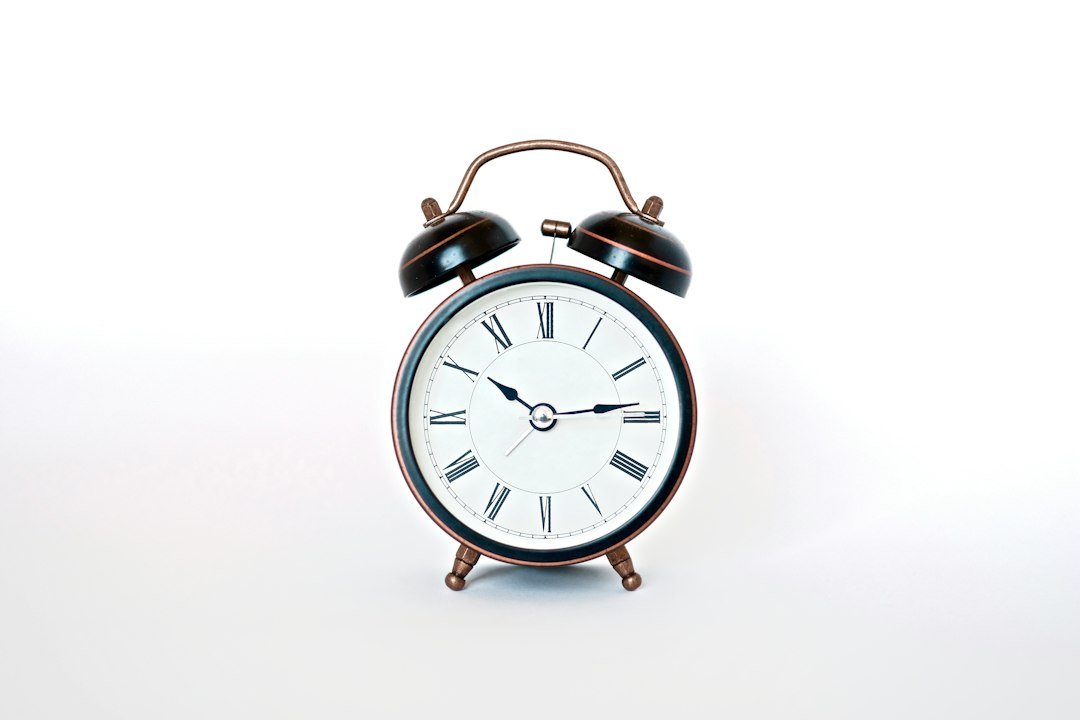
California meal break scheduling examples
Here’s how the rules work for three common shifts, each starting at 8:00 a.m.
- 6-hour shift: One meal break is required, but it can be waived in writing by mutual consent since the workday is six hours or less. The employee also gets one paid 10-minute rest break.
- 8.5-hour day with a 30-minute meal: The meal break has to begin before 1:00 p.m., the end of the fifth hour. Two paid rest breaks are owed, ideally mid-morning and mid-afternoon.
- 11-hour shift: Two meal breaks are required. The first has to start before the fifth hour of work ends and the second before the tenth hour ends. The second can be waived only because the shift is 12 hours or less and the first wasn’t waived. Three paid rest breaks are owed.
Leave some slack when building schedules around these deadlines. A California meal break planned for the very last minute becomes a violation the first time a customer shows up at 12:55 p.m.
On-duty meal breaks: the narrow exception
California permits an on-duty, paid meal break only when every one of these conditions is met, according to the Labor Commissioner:
- the nature of the work keeps the employee from being relieved of all duty, judged by an objective test,
- there’s a written agreement for an on-the-job paid meal break, and
- the agreement states that the employee can revoke it in writing whenever they want.
The Labor Commissioner’s examples include a lone worker in a coffee kiosk or all-night convenience store and a security guard alone at a remote site. Business convenience doesn’t qualify. If you could arrange coverage, a court will probably find that the nature of the work didn’t prevent a real break.
California meal break waivers
Waivers are permitted, but only inside the California meal break law’s limits:
- First meal break: can be waived by mutual consent if total work time is six hours or less.
- Second meal break: can be waived by mutual consent only if total hours are 12 or fewer and the first meal break wasn’t waived.
In Bradsbery v. Vicar Operating, Inc., decided April 21, 2025, a California Court of Appeal ruled that meal break waivers signed by non-exempt employees were enforceable, according to an Employers Council summary. Still, put waivers in writing, explain them in plain language and never pressure anyone to sign. A waiver won’t help once the shift goes past six hours.
Rest breaks: the other half of the law
Rest breaks have their own rules. According to the Labor Commissioner’s rest period FAQ:
- Employees get at least 10 consecutive minutes of rest for every four hours worked or major fraction of four hours. Anything over two hours counts as a major fraction.
- No rest break is needed when total daily work time is below three and a half hours.
- Rest breaks are paid and should land in the middle of each work period where practical.
- Employers have to relieve employees of all duties and give up control over how they use the time. Under the Augustus v. ABM Security Services decision, on-call rest breaks that tie employees to a location or device aren’t allowed.
| Hours worked in the day | Paid 10-minute rest breaks |
|---|---|
| Less than 3.5 | None |
| 3.5 up to 6 | One |
| More than 6, up to 10 | Two |
| More than 10, up to 14 | Three |
The table below applies the four-hours-or-major-fraction rule, treating anything over two hours as a major fraction.
California meal break premium pay
If a required break isn’t provided, the employer owes one extra hour of pay at the employee’s regular rate for each affected workday. According to the Labor Commissioner, missing several rest breaks on the same day still adds up to only one extra hour for that day. Since meal and rest breaks are separate rules, a day with both kinds of violation can cost two premium hours.
Two details change the calculation:
- Regular rate, not base rate. In Ferra v. Loews Hollywood Hotel (July 2021), the California Supreme Court ruled that the regular rate of compensation for break premiums means the same as the regular rate of pay for overtime, so it includes nondiscretionary payments like many bonuses, according to the case summary.
- Not hours worked. The Labor Commissioner says the premium doesn’t count as hours worked for overtime.
A hypothetical: an employee earns $24 an hour, and a nondiscretionary production bonus raises their regular rate to $26 for the week. Every missed meal break that week costs $26, not $24. If a 20-person team misses one meal break a week, that’s $520 a week, or $27,040 a year, before penalties or legal fees.

California meal break records and rounding
In Donohue v. AMN Services, decided February 25, 2021, the California Supreme Court ruled that employers can’t round meal break punches, and that time records showing noncompliant meal breaks raise a rebuttable presumption of a violation, according to the court’s opinion.
In practice, your timekeeping system becomes the main evidence in any California meal break claim. If the records show a 27-minute meal or one starting at 5 hours and 10 minutes, expect to have to prove the employee was offered a compliant break and chose otherwise. Set up your system to capture actual punches and flag short or late meals for a premium or a documented reason.
File the paperwork explaining exceptions alongside the time records: signed meal waivers, on-duty meal agreements with the written right to revoke, and notes showing when an employee chose to skip or shorten an offered break. Keep them for every pay period. Without them, a short or late punch is hard to explain.
Who the California meal break law covers
Meal and rest break rules come from the Industrial Welfare Commission wage orders and apply to non-exempt employees those orders cover. Exempt executive, administrative and professional employees are generally outside them.
According to the Labor Commissioner, some industries have variations:
- Motion picture industry: employees under Wage Order 12 can work up to six hours without a meal break of 30 minutes to one hour.
- Health care: Wage Orders 4 and 5 contain minor exceptions about leaving the premises during an off-duty meal break.
- Construction, drilling, logging and mining: under Wage Order 16, rest breaks can be staggered and there’s no requirement to designate a place to eat, though water, soap and single-use towels are still required.
California meal break compliance checklist
Run through this California meal break checklist every quarter.
- Write meal and rest break rules into your handbook in plain language.
- Schedule meal breaks to begin well ahead of the end of the fifth hour, not right at the deadline.
- Arrange coverage so employees can genuinely step away.
- Record actual meal punches without rounding.
- Flag short, late and missed meals automatically and pay the premium in the same pay period.
- Use written waivers only for shifts of six hours or less, or for the second meal on shifts of 12 hours or less.
- Use on-duty meal agreements only where the work truly requires them, with a written right to revoke.
- Calculate premiums at the regular rate, nondiscretionary bonuses included.
5 costly California meal break mistakes
- Late first meals. A break starting after the fifth hour is a violation, even at a full 30 minutes.
- Rounding meal punches. Donohue prohibited it for meal breaks.
- Paying premiums at the base rate. Ferra requires the regular rate.
- Keeping employees on call. Tying someone to a radio or the premises changes the status of the break.
- Treating a signed waiver as a blanket pass. Waivers only work inside the six-hour and 12-hour limits.

Our Take / Expert Perspective
Our take: California lunch break law looks simple on paper but gets expensive in practice, because every violation leaves a time stamp. Since Donohue, the timekeeping system is the main witness, and it never forgets a late lunch.
The danger isn’t one missed break. It’s a pattern repeated across a workforce for years, priced at the regular rate after Ferra. That’s how small scheduling habits grow into class actions and representative claims.
The fix is operational rather than legal: schedule meals early, build real coverage, record real punches and pay premiums automatically when the data shows a miss. Our forecast is that employers who automate premium payments will face fewer disputes, because the claim is already paid. That’s a forecast, not a finding.
What to do now: pull 90 days of time records, count meal breaks that began after the fifth hour or lasted under 30 minutes, and fix scheduling for the worst-performing teams first.
Frequently Asked Questions
How long is a lunch break in California?
Under California lunch break law, 30 minutes or more. It has to begin by the end of the fifth hour of work, and workdays over 10 hours require a second 30-minute break.
Are meal breaks paid in California?
A California meal break is normally unpaid when the employee is relieved of all duty. On-duty meal breaks, and breaks where the employee has to remain on the premises, must be paid.
Can an employee waive a meal break in California?
Yes, within limits. The first meal break can be waived by mutual consent if the workday is six hours or less; the second if the workday is 12 hours or less and the first wasn’t waived.
What is the penalty for a missed meal break in California?
One extra hour of pay at the employee’s regular rate for every workday a required meal break isn’t provided. Missed rest breaks can add a separate hour.
Can I take my meal break at the end of my shift?
Not on a shift longer than five hours. The first meal break has to begin before the fifth hour ends, so a meal break added to the end of a longer shift doesn’t comply.
Do exempt employees get meal breaks in California?
The wage order meal and rest break rules generally don’t cover exempt executive, administrative and professional employees, though many employers offer breaks anyway as a matter of policy.
This article is for general information only and is not legal advice. Laws differ by state, province and country; consult a qualified attorney for your situation.
Photos: Dan Gold, insung yoon, Zan Lazarevic and Phil Hearing on Unsplash.
Sources
- California Labor Commissioner’s Office: Meal Periods FAQ, checked November 6, 2026
- California Labor Commissioner’s Office: Rest Periods FAQ, checked November 6, 2026
- Supreme Court of California: Donohue v. AMN Services, LLC, No. S253677 (February 25, 2021), checked November 6, 2026
- Justia: Ferra v. Loews Hollywood Hotel, LLC, No. S259172 (2021), checked November 6, 2026
- Employers Council: Summary of Bradsbery v. Vicar Operating, Inc. (April 2025), checked November 6, 2026
- aiandblog: more HR Compliance articles and our Editorial Policy






Leave a Reply